
If you live in a condominium or serve on a board, you have likely interacted with a condo manager. But behind the scenes, their work extends far beyond attending meetings or responding to emails. A condo manager acts as the engine of a residential community, ensuring that the complex machinery of condo and strata management services governance, finance, and physical maintenance runs without friction.
At its core, the role is about protecting a significant investment. For most owners, a condo is their largest financial asset. The manager is the professional hired to preserve and grow the value of that asset through expert oversight.
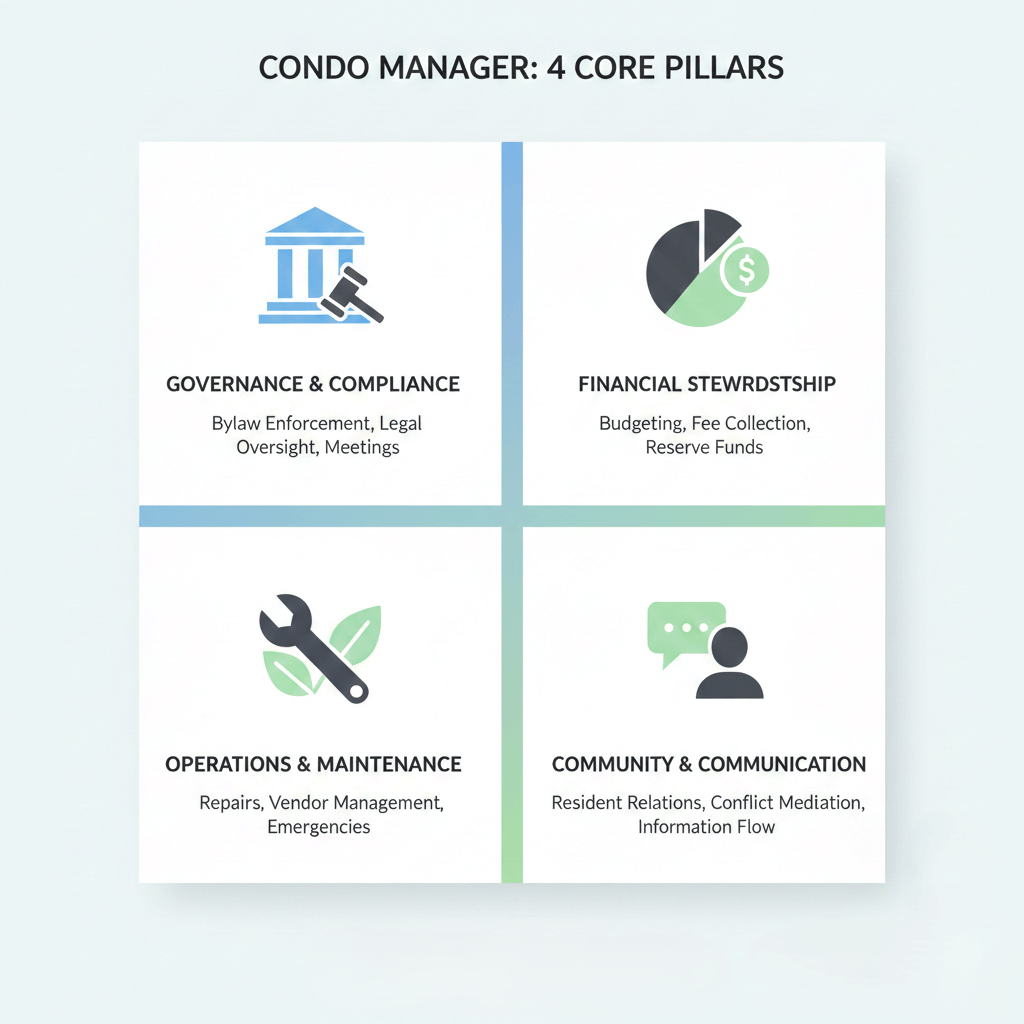
To understand the daily life of a manager, it helps to look at the three main pillars of their responsibility. These categories represent the Brain, the Wallet and the Heart of the corporation.
Think of this as the Brain. A condo corporation is a legal entity that must follow strict provincial or state laws. The manager ensures the community stays on the right side of the law by maintaining strict compliance with the Condominium Property Act, which dictates how corporations must operate and interact with owners.
This is the Wallet. Managing financial complexes is critical; a community cannot function without sound financial health. The manager works closely with the Board to handle:
This is the Heart. The most visible part of the job involves keeping the lights on and the hallways clean.
Often overlooked, this pillar is what makes a building feel like a home.
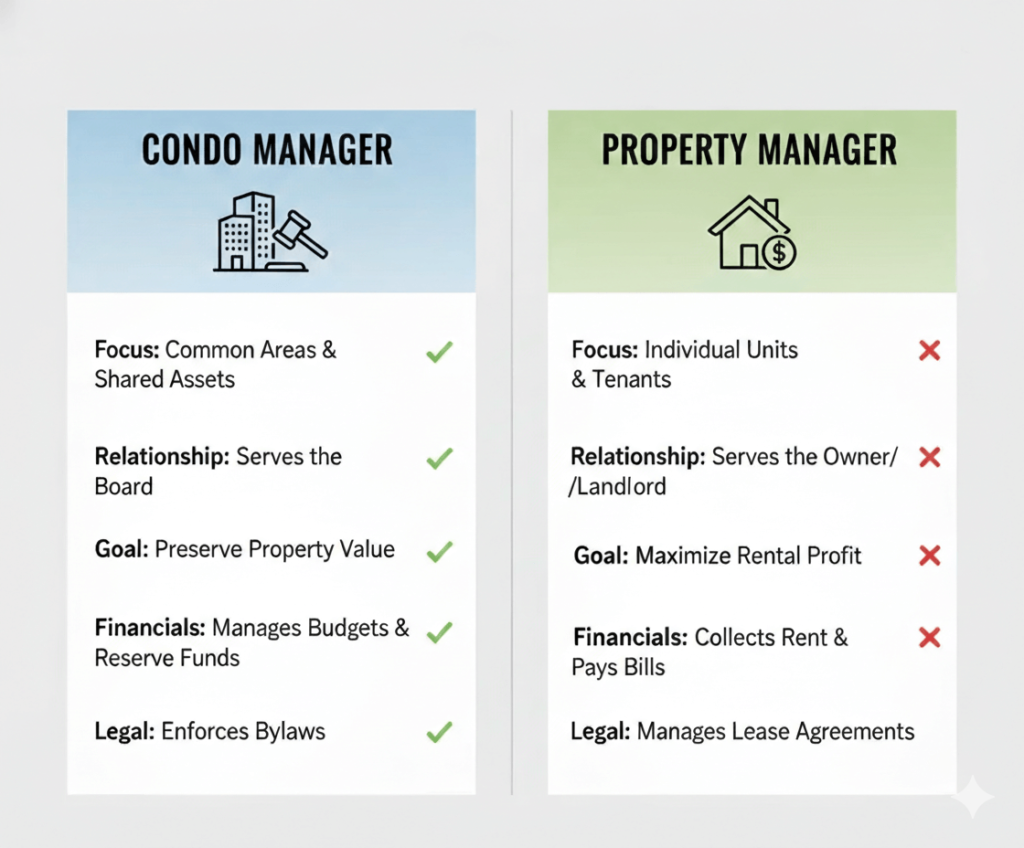
One of the most common points of confusion is the difference between a condo manager and a property manager. While the titles are often used interchangeably, their goals are fundamentally different.
| Feature | Condo Manager | Property Manager |
| Who they work for | The Condo Board (The Community) | The Property Owner (The Landlord) |
| Primary Goal | Governance and Asset Preservation | Profitability and Tenant Retention |
| Main Focus | Common areas and shared assets | Individual units and leasing |
| Decision Authority | Implements Board decisions | Often has autonomy to sign leases |
In the past, condo management was buried in paper ledgers and manual checks. Today, the role has shifted toward digital transparency. At Converge Condo, we believe that a manager should spend less time on data entry and more time on the property.
Modern management involves using real-time reporting tools like our proprietary Converge Connect app that allow Board members to see financial health at a glance. Instead of waiting for a monthly paper report, Boards can now access digital portals to track maintenance requests or review vendor contracts instantly. This shift toward invisible service means that the administrative burden is handled by smart systems, allowing the manager to focus on high level strategy and resident relations.
Whether you are looking for Calgary condo management or support in Edmonton, some smaller communities attempt to self manage to save money. However, the complexity of modern building systems and the legal risks involved often make professional management a more cost effective choice in the long run.
A high-performing manager is more than just a person with a clipboard; they are a licensed professional who adheres to strict industry standards. When evaluating a manager, look for their commitment to ongoing education and their ability to navigate complex legal landscapes.
Beyond basic licensing, a dedicated manager stays ahead of legislative shifts and industry trends through active involvement with organizations like the Canadian Condominium Institute (CCI). This connection ensures your board receives advice based on national best practices and the latest legal precedents.
When interviewing potential management partners for your building, look for these three indicators of quality:
No. The Board is the decision-making body. The manager is an advisor and an agent of the Board. They provide the expertise and execute the tasks, but the final vote always rests with the elected directors.
The salary or management fee is a line item in the annual budget. It is paid by the condo corporation using the monthly fees collected from all unit owners.
The first step is a formal review of the management contract. Most agreements have specific performance standards. If communication or maintenance is failing, the Board should meet with the management company's leadership to discuss a correction plan or, if necessary, begin the process of finding a new partner.
Effective management is the difference between a building that simply exists and a community that thrives. If you are looking for a more transparent, tech forward approach to your building’s needs, we would be happy to help.

Victoria Office
535 Yates St Suite 200
Victoria, BC V8W 2Z6
Edmonton Head Office
11810 Kingsway NW
Edmonton, AB T5G 0X5
Calgary Office
Suite 290, 6815 8th Street NE
Calgary, AB T2E 7H7